
Burnsville, MN · Garage Door Service
Why Older Burnsville Garages Let In Cold Air
Burnsville's 1960s-70s housing stock often has original weather seals, letting cold air and drafts into attached garages through long Minnesota winters.
- Repairs & new doors
- Springs & openers
- Serving 7 nearby communities
The Cost of This Job
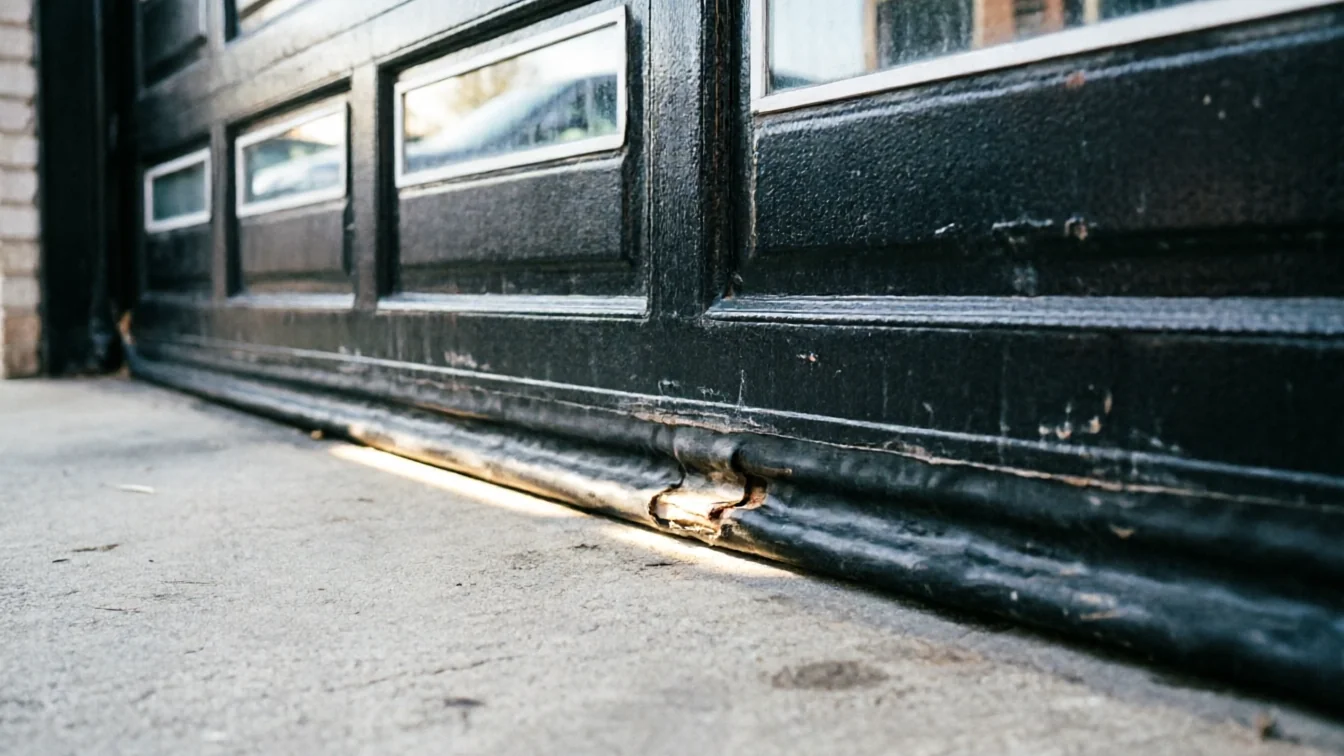
What this costs depends on what's actually failing, and that's not something we can tell you without looking at the door. A worn bottom seal or brittle side stop is a small job - pull the old vinyl, run new weatherstrip through the retainer, done. But a lot of the garage doors in this service area date back to the 1956-2005 building stock, with most of them going up around 1970, and on doors that age the seal retainer track itself is sometimes rusted or bent from decades of freeze-thaw cycles. When that's the case, new vinyl won't stop the draft - the track has to come off, or the bottom panel gets replaced outright, and that's a bigger job than a seal swap. We'll tell you which one you've got before we touch anything. With median household income across this service area sitting around $100,250, most owners here choose to fix the retainer properly the first time rather than stuff foam under the door every November and redo it again the next winter. That's usually the cheaper path over a few years, even if it costs more upfront than a strip of vinyl.`
What Local Conditions Do
Burnsville sits in a cold-moderate climate band, which means the seals on your door go through real freeze-thaw stress every year rather than just baking under constant heat like they would further south. Vinyl and rubber weatherstrip shrink when it's cold, and they shrink unevenly - the bottom seal pulls away from the slab right where you need the seal most, in January, not in July. That gap doesn't close back up on its own when the weather warms; the material has already taken a set. Across the 31 communities in this service area, where the housing stock is mostly 1960s and 70s construction, this cycle has been repeating for fifty-plus winters on doors that may never have had the seal replaced. The symptom is the same every time: a visible gap at the bottom corners, cold air pooling along the garage floor, and sometimes a line of frost on the inside of the door itself on the coldest mornings. It's not damage in the sense of something breaking - it's just rubber doing what rubber does after five decades of Minnesota winters. The fix is mechanical, not seasonal, and it doesn't require waiting for warmer weather to address.
Checking It Yourself
Close the garage door and walk around the outside with the lights off inside the garage. If you can see daylight at the bottom corners or along either side, that's your draft source - no tools needed for that part. Next, run your hand along the bottom seal from inside; if it's stiff, cracked, or doesn't spring back when you press it, it's past its useful life. Houses built in the 1960s and 70s era that makes up most of this area's stock often still have the original seal track, and on steel track especially, check for rust bubbling or bends where the vinyl bead sits - a seal can be brand new and still leak if the channel holding it is warped. A dollar bill test works too: shut the door on a bill at a few points along the bottom: if it slides out without resistance, the seal isn't sealing there. One thing to flag honestly - this kind of check tells you there's a draft, but it won't tell you whether the fix is a $15 strip of vinyl or a full track and panel swap. That part needs eyes on the actual hardware, not a flashlight and a dollar bill.
What Is Going On
The short version: the seals on a lot of doors in this service area are original or close to it, because the housing stock here runs mostly 1956 through 2005 with a median build year around 1970. Vinyl weatherstrip wasn't designed to last fifty years, and in a cold-moderate climate band it hardens and cracks faster than it would somewhere with milder winters - every freeze cycle makes it a little less flexible, and eventually it stops conforming to the slab at all. That's the draft. It's not a sign the door is failing structurally; it's a maintenance item that got skipped for decades because nobody notices a seal until the air coming through it gets cold enough to feel. With 78,670 owner-occupied houses spread across this service area, a meaningful share of them are sitting on exactly this kind of original hardware. The fix doesn't require replacing the door. It requires replacing a $20 strip of material and, sometimes, the metal track that holds it - and figuring out which one you need is a five-minute look, not a guessing game.
Frequently asked questions
How old does a garage door seal get before it needs replacing?
There's no fixed age - it depends on sun exposure and how the track holding it has held up. But most of the housing stock in this service area dates to the 1960s and 70s, and vinyl weatherstrip from that era has almost always hardened or cracked by now. If you can press it and it doesn't spring back, it's done, regardless of the exact year.
Why does the draft come back every winter even after I add foam tape?
Foam tape is a patch, not a fix. In a cold-moderate climate like this one, the underlying seal has already lost its shape, so tape just covers the gap until it compresses or falls off. The seal retainer and vinyl need to be replaced so the door makes contact with the slab on its own.
Can I just replace the seal myself?
On a lot of doors, yes - the bottom seal slides into a track and a new length of vinyl is a straightforward swap. The complication is when that track itself is rusted or bent, which shows up more often on original 1960s-70s hardware. If the track's compromised, the vinyl alone won't stop the draft.
Related garage door services in Burnsville
More garage door guides
Book garage door service in Burnsville
Call now or request a quote - tell us what the door is doing and where you are.