
Burnsville, MN · Garage Door Service
Why Springs Fail in Burnsville Winters
Burnsville homes built mostly in the 1960s-70s face real cold-weather spring failure. Here's what drives the cost, what to check, and what's actually going on.
- Repairs & new doors
- Springs & openers
- Serving 7 nearby communities
The Cost of This Job
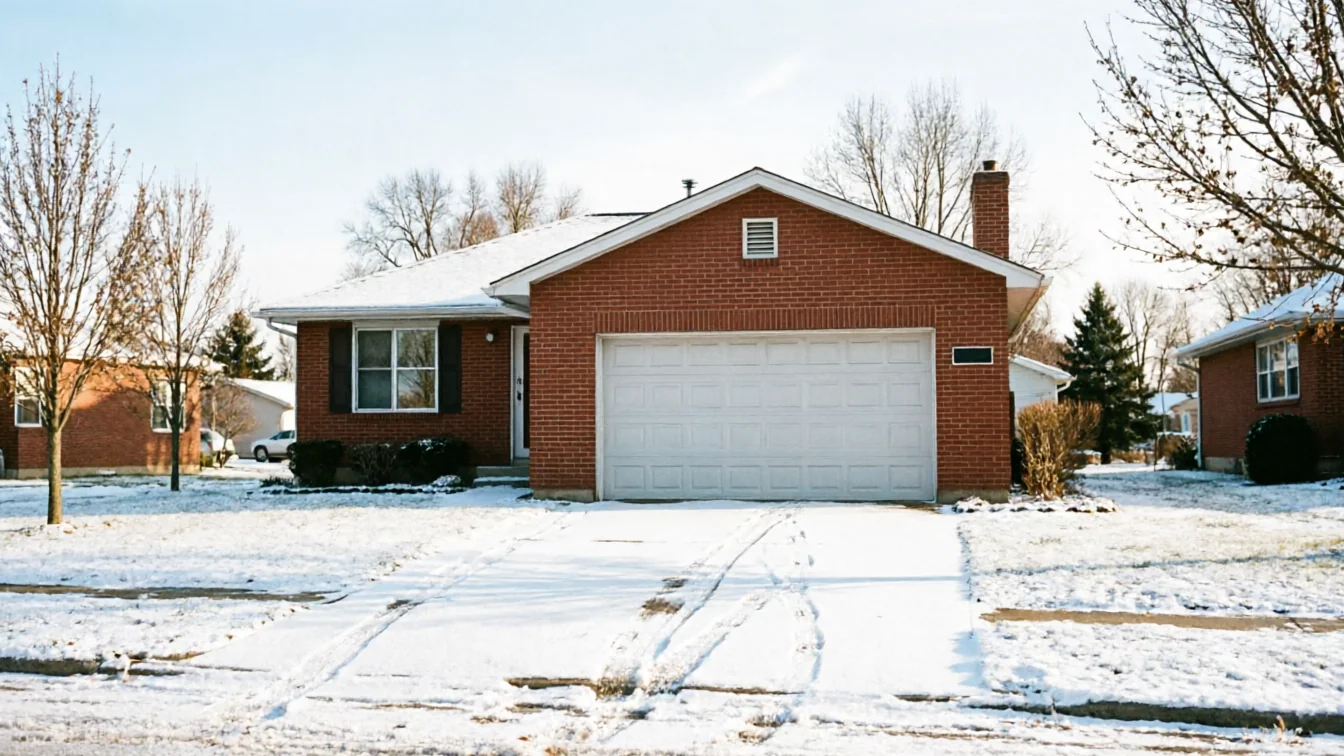
We can't quote a number here without a look at your door, because what drives the bill is what's on the hardware, not a flat rate. What we can tell you is what changes the job. Burnsville's housing stock mostly went up in the 1960s and 70s, with the broader range running 1956 to 2005 (median build year 1970). A lot of those original doors still carry the torsion springs and track hardware that shipped with the house, and that gear wasn't built for 50+ years of Minnesota winters. If your spring or cable is original to a house from that era, the tech is often replacing more than the spring itself - the drum, the bearing plate, sometimes the whole shaft, because one part that age rarely fails alone. A newer door, or one that's already been through a hardware upgrade, is a smaller job almost every time. Tell whoever you call the rough age of your house and your door when you book - it changes what they bring on the truck, and it changes how long they're at your place.
What Local Conditions Do
Burnsville sits in a cold, moderate climate band, and that matters more to a garage door spring than most people think. Steel contracts in the cold. A torsion spring that's been doing its job fine all summer gets measurably stiffer once the mercury drops, and the stress on a spring that's already fatigued from age or cycle count goes up right when the metal is least forgiving. That's when a spring that was marginal in October lets go in January - not because the cold caused the failure outright, but because it's the final push on a spring that was already close to its limit. This is a seasonal pattern here, not a one-off. If your door has felt heavier, noisier, or slower to close as the weather turned, that's not your imagination - it's the steel.
Checking It Yourself
You can look at a few things safely without touching the spring itself. First, check the gap at the top of the door when it's closed - a sagging gap or a door that sits crooked on one side often means one spring has already lost tension, usually the one on the side where the door tilts. Second, listen for the door on the way up. A grinding or popping sound as it lifts is usually a bearing or a cable, not just noise. Third, look at the spring coils themselves if you can see them safely from the ground - a visible gap in the coil where it shouldn't be is a sign it's stretched or close to failing. Do not put your hands near the spring or try to adjust the tension bolts. A torsion spring under load carries enough force to break a bone or worse, and that's true whether it's fully wound or partway through failing. If anything looks off, that's a call, not a DIY afternoon.
What Is Going On
Most of the spring calls we get from this area trace back to the same root cause: original hardware, decades old, meeting a cold snap. With median construction around 1970 across Burnsville and the surrounding 31 named areas sharing that same '60s-70s stock, a huge share of doors in this market are running springs that have outlived their rated cycle count by a wide margin. The spring doesn't know the house is comfortable and the furnace is running - it only knows tension, temperature, and fatigue. When all three line up on a cold morning, it goes. This isn't a defect in your door. It's ordinary wear meeting the one season that exposes it. The fix is usually straightforward once we're looking at it in person, but guessing at it over the phone isn't something we do - every door and every spring count is different enough that it needs eyes on it.
Frequently asked questions
Why does my spring always seem to break in winter, not summer?
Cold steel is stiffer and less forgiving than warm steel. A spring that's close to the end of its life handles summer fine but hits its breaking point once temperatures drop, because the added stress from the cold is often the last push a fatigued spring needs.
My house was built in the 1970s - should I expect the original spring is still on there?
It's common in this area. A lot of Burnsville doors from that era are still running original torsion hardware, which means the spring, drum, and bearing plate are all decades past their intended service life. Worth having checked before it fails on its own schedule.
Can I just replace the one spring that broke?
Sometimes, but on an older door we'll usually look at the second spring too - if one failed from age and fatigue, the matching spring on the other side is on the same clock and often not far behind.
Is it safe to drive on the door opener if I think a spring is weak?
No. If the door feels heavy, uneven, or the opener strains to lift it, stop using it and call. Running an opener against a failing spring puts extra load on the opener gears and increases the chance the spring lets go while the door is in motion.
Related garage door services in Burnsville
More garage door guides
Book garage door service in Burnsville
Call now or request a quote - tell us what the door is doing and where you are.